• Home
  • ABOUT

FORGET MEMORY BLOG

Thoughts from the author of the new book FORGET MEMORY: Creating better lives for people with dementia. To purchase the book, see the ABOUT tab above

Feeds:
Posts
Comments
« Transforming Activities in Long Term Care
Episode One: HBO’s Alzheimer’s Project »

“Hope at the expense of caution”: NYT’s reviews HBO’s Alzheimer’s Project

May 9, 2009 by Anne Basting

I’ll watch the HBO series with an open heart and mind – I swear I will.

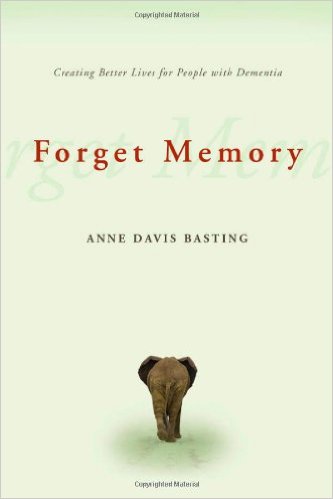
But the reviews are certainly daunting.  The whole point of Forget Memory is that there is MORE to Alzheimer’s than tragedy.  That there is HOPE in science, but there is also HOPE in human beings – in our ability to learn to be in the company of people with dementia and to find meaning in that experience.  In one section of the book, I talk about the types of stories that are told about dementia in popular culture.  By far the most dominant one is TRAGEDY with science as HERO.  And from Alessandra Stanley’s review in the NYT’s, it sounds as though the HBO project not only falls into this category, but takes it to a new extreme.

Stanley points out that in the segment on developments in research, medical researchers enthusiastically suggest that they are very near a cure. One in particular calls it the most exciting area in medical research today.  But Stanley writes:

“Neither he nor the filmmakers deliver many caveats about the long, bumpy road from clinical trial to prescription pad. At times the collective exuberance is so persuasive that viewers have to remind themselves that there is as yet no way to prevent the disease or even slow its progress.

And that’s a problem. It suggests that “The Alzheimer’s Project” comes with an implicit agenda of morale boosting — and fund-raising — that could compromise a balanced understanding of this frightening and complicated disease.”

It’s a little heartbreaking.  In Forget Memory, I profile over 10 programs that are raising the quality of life of people with dementia and reducing stigma and fear – over 10 programs where HOPE is in humanity – our ability to reach each other, care for, honor, and learn from/with even those late in the disease.   But what we’ll hear in the Alzheimer’s Project looks like it loss of self, suicide as the only option, nobility of caregivers in a losing battle, and the heroism of science.   At least, after working so hard on a book for so long, its message will still be relevant when it comes out at the end of the month…

It’s fantastic to get the country talking about Alzheimer’s.  It is.  More people need to know about the services available, and more people need to ask how they can help.  But a message so powerfully frightening about the lived experience and so powerfully positive about science risks deepening the pit of despair when cure continues to be elusive rather than X’ing out hopelessness.

Also see the NYT’s background article on the Alzheimer’s Project.

Like this:

Like
Be the first to like this post.

Posted in cultural phenom, film, medicine, public education | Tagged alzheimer's, forget memory, HBO Alzheimer's Project, memory loss, NYT's review | 2 Comments

2 Responses

  1. on May 10, 2009 at 1:07 pm DON MOYER

    I will not watch this with an open mind, nor any other sort of mind. I do not need to see another version of the same old fund-raising pitch: See the tragedy. See science riding to the rescue.

    I do support much greater funding for the science because we do not know nearly enough about what is going wrong in our brains.

    We do know very much about how persons living with memory challenges can manage those challenges and enjoy life. BUT, the Alzheimer’s empire pays very little attention to this knowledge and spends almost nothing making use of this knowledge.


  2. on May 10, 2009 at 4:55 pm Mary Poole

    I did watch with an open mind. I had to really focus and search for the positive, a glimpse of the memory for song and music, the response to “I love you”. Pass the Kleenex


Comments are closed.

  • Archives

    • May 2012 (2)
    • April 2012 (2)
    • March 2012 (1)
    • February 2012 (1)
    • January 2012 (2)
    • December 2011 (2)
    • November 2011 (2)
    • October 2011 (3)
    • September 2011 (2)
    • July 2011 (1)
    • June 2011 (2)
    • May 2011 (2)
    • March 2011 (2)
    • January 2011 (1)
    • November 2010 (2)
    • October 2010 (2)
    • September 2010 (2)
    • August 2010 (1)
    • July 2010 (2)
    • June 2010 (2)
    • May 2010 (1)
    • April 2010 (2)
    • March 2010 (3)
    • January 2010 (1)
    • December 2009 (1)
    • November 2009 (2)
    • October 2009 (1)
    • September 2009 (4)
    • August 2009 (5)
    • July 2009 (1)
    • June 2009 (4)
    • May 2009 (10)
    • April 2009 (7)
    • March 2009 (7)
    • February 2009 (5)
    • December 2008 (1)
    • November 2008 (3)
    • October 2008 (5)
    • September 2008 (5)
    • July 2008 (3)
    • June 2008 (6)
    • May 2008 (8)
    • April 2008 (7)
    • March 2008 (4)
    • February 2008 (5)
    • January 2008 (7)
    • December 2007 (1)
    • November 2007 (4)
    • October 2007 (8)
    • September 2007 (11)
  • Categories

    • art (35)
    • books (19)
    • cultural phenom (85)
    • disability (16)
    • film (23)
    • history of memory (8)
    • long term care (4)
    • medicine (7)
    • music (6)
    • public education (56)
    • science of memory (15)
    • theatre (1)
    • Uncategorized (68)
  • Pages

    • ABOUT
      • Press/Presentations

Blog at WordPress.com.

Theme: MistyLook by Sadish.


Follow

Get every new post delivered to your Inbox.

Powered by WordPress.com