Feeds:
Posts
Comments

Archive for the ‘science of memory’ Category

A really fascinating article today in the NYT’s about the “super-memory” study of the 1 in 200 people who make it to 90 with their cognition largely in tact.  And the 1 in 600 who make it to 95 without a diagnosis of dementia.

The study of these folks by USC and UC Irivine is trying to tease out the answer to the condundrum “Are they active because they are sharp or are they sharp because they are active?”

The study is finding that exercise and diet aren’t as big of an indicator as some studies are suggesting – but that mental challenge/exericise and social engagement are.

“So far, scientists here have found little evidence that diet or exercise affects the risk of dementia in people over 90. But some researchers argue that mental engagement — doing crossword puzzles, reading books — may delay the arrival of symptoms. And social connections, including interaction with friends, may be very important, some suspect. In isolation, a healthy human mind can go blank and quickly become disoriented, psychologists have found.”

But the most fascinating thing about the article is the way the group of card-playing “super-memory” 90+ year olds talk about what happens when they detect one of them is slipping.  They are kicked out of the group.  And, as they observe, their isolated friends quickly decline.

My question is WHY?  Isn’t there something else they could do that could maintain their friendships?  Like maybe…ART?  DANCE?  MUSIC? POETRY?  WRITING?  Cards are fantastic.  But you can also challenge yourself mentally in a non-competitive way that allows for friends to maintain social connections rather than set them off on the ice-flow.

Read Full Post »

And now we learn, in the 2 weeks before the release of HBO’s new Alzheimer’s Project on May 10th, that Maria Shriver is an executive producer.  She’s making the press rounds to promote the project now – I’ve seen her last Sunday’s NYT’s Magazine and this article and interview in AARP’s mag.

I am reminded of something Naomi Boak (Exec Producer of the documentary The Forgetting) told me once.  In so many words, she said that the point of film/tv is to have a big message that gets/holds attention and leads people to more nuanced ideas on websites, articles, and books.  But is it worth it?  Do people ultimately get the more nuanced information?  In response to the AARP interviewer’s question “Why should more people be concerned about Alzheimer’s”, Shriver talks of the increasing numbers of people with early on-set, and then says “and with Alzheimer’s you are out of commission on every level. You need 24-hour-a-day care, but we don’t have enough caretakers and facilities.”

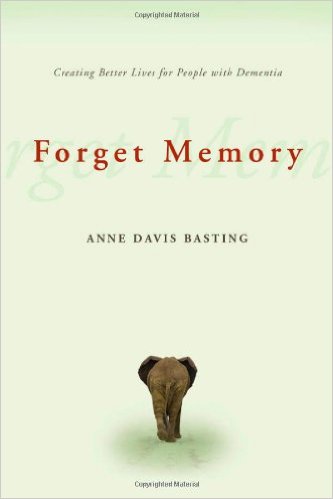
Eventually yes.  But the more nuanced story would explain that people can live 15 years with Alzheimer’s and other types of dementia.  I worry, as I do throughout Forget Memory, that such alarming statements usher those trying to live with the disease (and I can imagine Peter Whitehouse cringing at my use of that term!) right back into stigma, social isolation, and shame.

David Shenk and I have a friendly disagreement on this – as I do with many scientist/researchers.  Perhaps they are right and the race for the cure and the tragic story need to lead popular consciousness in order to get any attention for Alzheimer’s in our landscape of multi-tasking where ageism and other fears keep most people’s heads firmly planted in the sand.  Perhaps those of us in the arts and person-centered care movements just need to get a lot louder.

Read Full Post »

I just read a fascinating article called “Brain Gain” in the most recent New Yorker.  At first blush, one might not connect the stories of college students (or professional poker-players) taking “neuro-enhancers” like Adderall for a cognitive boost with concerns over memory loss.  But raising for bar for “normal” cognition creates greater pressure and worry over “normal” age-related memory loss.  Peter Whitehouse has been talking about this link for years, particularly in his critique of the pharmaceutical industry.  And Carol Elliott’s Better than Well makes a similar point – that we find ourselves where people feel cheated if they are just “normal.”

“Brain Gain” author Margaret Talbot makes an explicit link to aging and memory function – deep in the article she mentions a 30-year old man who takes neuro-enhancers because he worried “he ‘didn’t have the mental energy, the endurance, the–I don’t know what to properly call this–the sponginess that I seem to recall having when I was younger.’”

He later makes the link directly when he talks about his wife, who is 9 years younger – “‘She’s twenty-one, and I want to stay young and vigorous and don’t want to be a burden on her later in life.’ He didn’t worry about visible signs of aging, but he wanted to keep his mind nimble and healthy for as long as possible.’” (41)

Will we soon all be taking Adderall?  Will this become such a universally accepted right (to be alert and cognitively focused) that neuro-enhancers will go over-the-counter?  Their common use in a generation defined with the label ADHD might point to a new normal of enhanced cognitive expectations just when the boomers head into normal, age-related memory loss.

Read Full Post »

Saw an interesting article today based on a study from NC State.   Dr Tom Hess found that older adults performed worse on memory tests if negative stereotypes about aging were activated.   Stigma and fear over how one is being perceived really do make a difference…

Read Full Post »

Today’s NYT’s article on the memory research at SUNY Downstate Medical Center in Brooklyn is the stuff of sci-fi-esque movies like Eternal Sunshine of the Spotless Mind.  Looks like they can block some unpleasant memories in mice – like the memory of a particularly disgusting taste (wonder how they simulated that…) – some three months after it occured.  The concepts hold promise for better understanding how memories are formed and, hopefully, unformed, as in dementia. They remind us of the ethical issues at play in blocking memories.  But anyone suffering from PTSD will probably cheer at the possibility.

The odd thing about the article is that it is framed as a contest between artists and writers and scientists to find the meaning in human identity through memory.  At the start, the writer says that the artists and writers have been talking about this for centuries.  At the end, it seems, the scientists are poised to surge ahead.  It’s great to have the work of artists and writers identified – but really unneccessary to pit the two against each other…we continue to work hand in hand.  Or rather molecule in molecule.

Read Full Post »

There is a swirl of research out there now…and it’s confusing.  On the one hand, there is a growing body of research that suggests that social, creative activities help stave off memory loss.  This article for example, suggests that activities like quilting, pottery and computer games reduce the effects of memory loss.

Logic would have it that specific brain training exercises would do even more.  And the market for such software has grown from 25 million in 2005 to 225 million this year.  This article suggests that such programs might have a short term effect, but no generalizable, long term effects.

After seeing many creative programs with people with dementia in action, my belief is that a major part of the impact of these programs is the creation of an accepting, supportive community around the person.  Learning and expression are possible, and when they are awakened, the quality of life improves for both sides of the care partnership.

Read Full Post »

There’s been lots of hype about cognitive fitness, with a slew of computer games and programs comign out to help older people train their brains.  They hint that cognitive fitness can delay or prevent the onset of dementia.  But this article suggests that the computer programs don’t have any more effect than doing a crossword in the newspaper.   Perhaps a glass of red wine, some friends, a little social dancing, and maybe a group game of scrabble might be the best combo!

Read Full Post »

I would love to read a good history of pharmaceuticals in this country. Just when did we become convinced that it is cheaper to medicate than to provide actual care or change behaviors? How is it that we arrive at the numbers that tell us this is so? And why do we believe them?

There’s a great article in today’s NYT’s Science section about the over-prescribing of anti-psychotic medications for people with dementia. The article mentions a tripling of the sales of the drugs, up to $12 billion in sales from 4 billion in 2000.  Sometimes, the anti-psychotics are the only thing that can relieve tremendous suffering.  But too often, they are prescribed to control behaviors that might be changed with improvements in care.  The author points out that just paying attention to people with dementia can improve their quality of life and behaviors.  Yet the suggestion is that improving care practices is too expensive. Would it really be more than 12 billion?

Read Full Post »

The NYT’s Science Section featured an interesting article today about how memory loss associated with aging might actually be recast as a widening of the attention/focus to better synthesize information rather than focus on details. This, the article tells us, is another way to define wisdom.

Might this also be true of other “losses” associated with age? Of mobility? Of vision? Of hearing? Of visual “sex” appeal? Those are rhetorical questions…

Read Full Post »

As the population ages, the marker of “normal” in memory loss will continue to shift. There are several books out now that address the worry over memory loss in all its manifestations – from seemingly benign to the significant losses in the dementia experience. The latest entry is coming out this month from Harmony Books, a division of Random House. Sue Halpern’s Can’t Remember What I Forgot: The Good News from the Frontlines of Memory Research is a personal journey through memory research. I’ll write more after I have a chance to read it, but for now, check out reviews and ordering info here.

Read Full Post »

Older Posts »

Follow

Get every new post delivered to your Inbox.

Join 31 other followers