Margaret Gullette’s opinion piece “Our Irrational Fear of Forgetting” in the Sunday New York Times on May 21st, 2011 strikes a provocative chord. That’s one of the many things that Margaret is exceedingly good at – striking chords. She’s also a painstaking researcher, an eloquent writer, a keen observer of culture, and a tenacious, on-message town crier.
The piece asks a simple question. “Is the prospect of the disease [Alzheimer's] so horrifying that it should prompt someone to consider suicide?”
It’s a hard question to answer in a short opinion piece. But her goal here isn’t to fully answer – but to drag out into the bright light of day the question that hides underneath every “senior moment,” every crossword puzzle, every advertisement for a “neurobic” computer game, every wrinkle cream, every mention of someone “still” having their mind, even every ad campaign of the Alzheimer’s Association.
“Is the prospect of the disease so horrifying that it should prompt someone to consider suicide?”
In the light of day, the question compels other questions. Like “how much of the horror is the financial ruin most families face with the disease?” “How much of the horror is our poorly trained and inadequate care system?” “How much of the horror is fear that keeps us from embracing people with Alzheimer’s with supportive care?” “How much of the horror can we actually change even if we don’t have a medical cure?”
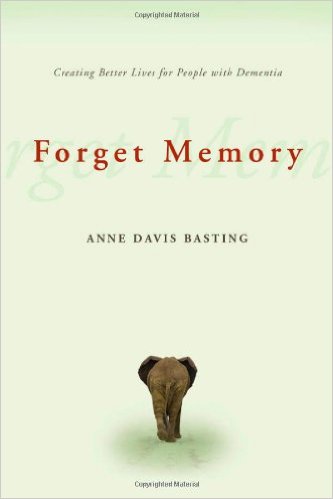
I’m thankful she mentioned my work in the piece – and the excellent Making an Exit by Elinor Fuchs. The letters to the editor the following week suggest that the reference to “forget memory, try imagination” wasn’t quite understood for its full intention.
Here is a letter I drafted in response – I doubt it’ll get printed, but I thought I’d share it here anyway.
LETTER TO NYT’s
The pain of experiencing Alzheimer’s, from the inside or the outside, cannot be covered with a band-aid of pithy phrases. Families and friends try everything to reignite the spark behind the eyes of a loved one wrestling with dementia. But when language is crumbling, “remember when?” and “remember me?” cannot make a person whole again. In fact, trying to rebuild memory can reinforce the pain of loss. When I say “Forget memory, try imagination” is not a pithy band-aid over an unhealable hurt. It is a guidepost, drawing family and friends to find each other again by simply removing the expectation to “remember.” The open, poetic language of improvisational storytelling, movement, music, or visual art can reconnect us in deeply meaningful ways. 15 years of research, practice, and the glowing faces of people with dementia who rediscover their ability to make meaning again are powerful proof that creativity and imagination are largely untapped reserves of strength when dementia strikes.
Anne Basting is the author of Forget Memory: Creating better lives for people with dementia, 2009, and founder of the TimeSlips creative storytelling project for people with dementia.
Read Full Post »